Can You Drink Alcohol While Taking Herbal Supplements?
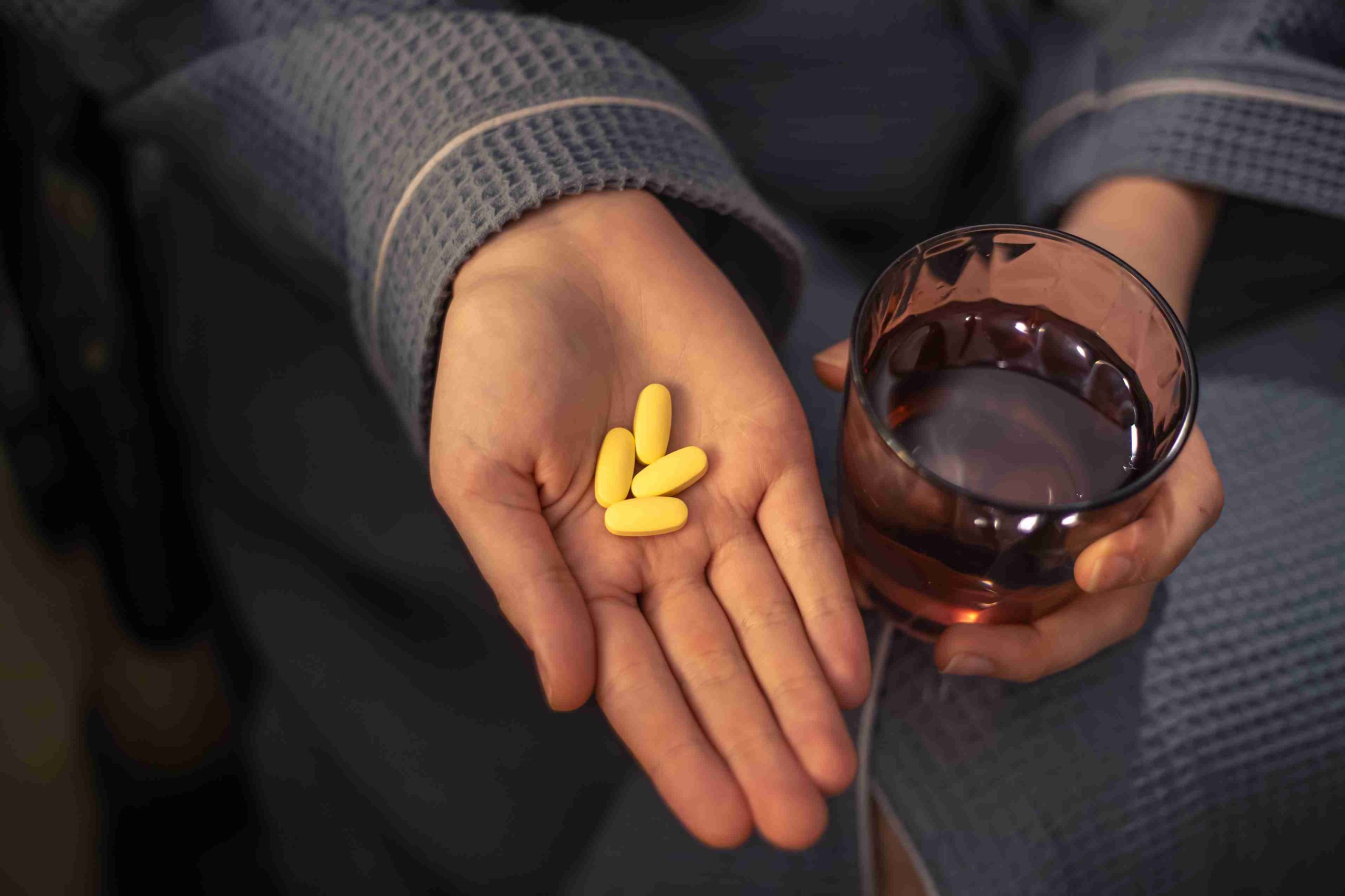
The question of whether you can drink alcohol while taking herbal supplements does not have one universal answer. Herbal products contain different plant compounds, and alcohol can affect the body in several ways. The combination may therefore be more important for some supplements than others.
Alcohol is processed primarily by the liver, while many compounds from supplements also undergo metabolism and elimination through the liver and digestive system. This does not automatically mean that taking an herbal supplement and having a drink will cause a problem, but it does mean that combining them should be approached thoughtfully.
The most important point is to avoid assuming that a product is automatically safe simply because it is described as natural. Natural ingredients can still have biological effects and may interact with medicines, health conditions, or other substances.
Can You Drink Alcohol While Taking Herbal Supplements?
For some healthy adults, occasional moderate alcohol consumption may not necessarily cause a noticeable problem with every herbal supplement. However, safety depends on the specific ingredients, serving size, frequency of use, amount of alcohol consumed, and personal health factors.
If you do not know how a particular herbal supplement behaves when combined with alcohol, the conservative approach is to avoid taking them at the same time. Checking the product label and asking a pharmacist or healthcare professional is especially appropriate when the supplement is concentrated or when you take prescription or over-the-counter medicines.
Key point: There is no universal rule that all herbal supplements are compatible with alcohol. The ingredient list and your personal health situation matter more than the word “herbal” on the label.
How Alcohol Can Affect Your Supplement Routine
Even when there is no known direct interaction, alcohol can influence the conditions in which you take a supplement. Alcohol may contribute to dehydration, affect sleep quality, irritate the digestive tract, and change how you feel physically the following day.
These effects can make it difficult to tell whether a supplement is responsible for a change in how you feel. For example, fatigue, stomach discomfort, headache, or poor sleep after an evening of drinking may have several possible causes.
Keeping your routine consistent can make it easier to identify how your body responds. If you are evaluating a new herbal supplement, avoiding alcohol during the initial period can provide a clearer picture of your individual tolerance.
Alcohol, Hydration, and Herbal Supplements
Hydration is another practical consideration. Alcohol can increase fluid loss, while inadequate fluid intake can contribute to symptoms such as thirst, headache, and fatigue. Drinking enough water throughout the day is therefore a sensible part of maintaining a supplement routine.
However, water should not be viewed as a way to cancel out potential interactions between alcohol and supplements. Staying hydrated supports normal body functions, but it does not make an otherwise unsuitable combination safe.
Hydration supports your routine, but it does not eliminate the need to consider supplement-specific safety.
When It Is Better to Avoid Alcohol
There are situations in which avoiding alcohol while taking herbal supplements is the more cautious choice. This is particularly relevant when you are starting a new product, increasing a dose, experiencing unexpected symptoms, or taking medications that may interact with alcohol or herbal ingredients.
Consider keeping alcohol out of the equation initially so you can observe your body’s response more clearly.
Ask a qualified healthcare professional about potential interactions rather than relying on general advice about herbal products.
If you notice dizziness, nausea, excessive drowsiness, stomach discomfort, or another unexpected reaction, pause and seek appropriate guidance.
Concentrated extracts can provide substantially different amounts of plant compounds than traditional foods or beverages, so product-specific guidance is important.
Should You Separate Alcohol and Your Supplements?
Separating alcohol from an herbal supplement can be a practical way to reduce uncertainty, particularly when you are unsure about the combination. However, simply leaving several hours between them does not guarantee that an interaction cannot occur.
The appropriate timing depends on the ingredients involved. Some compounds remain in the body longer than others, and alcohol itself is also metabolized over time. Therefore, spacing doses should not be treated as a universal solution for every supplement.
If the product manufacturer provides specific instructions about alcohol, follow those instructions. If there is no guidance and you have concerns, a healthcare professional can help assess the specific combination.
What to Check Before Combining Alcohol With an Herbal Product
Before deciding whether to drink alcohol while taking an herbal supplement, take a few moments to review the product and your circumstances.
- Read the full ingredient list. Look beyond the main herb and check for additional botanical ingredients or active compounds.
- Follow the recommended serving. Do not increase the amount because you believe a higher dose will compensate for alcohol-related effects.
- Consider your medications. Alcohol and supplements can each interact with medicines, making professional advice important when medication is involved.
- Pay attention to your response. New or unusual symptoms are a reason to stop and reassess rather than continuing automatically.
- Consider the amount of alcohol. Occasional consumption and heavy drinking are not equivalent situations from a safety perspective.
What About Different Types of Herbal Supplements?
Not all herbal supplements should be treated as one category. A simple botanical capsule, a multi-herb formula, a concentrated extract, and a product containing additional active ingredients can have very different considerations.
For this reason, broad statements such as “alcohol is always safe with herbs” or “alcohol must never be used with herbs” can be misleading. The more useful approach is to assess the individual product and the person taking it.
This is particularly important for products intended to influence physiological processes. If an herbal product has a noticeable effect on your body, combining it with alcohol should be approached with additional caution.
A Practical Approach to Alcohol and Supplements
If you occasionally drink alcohol and also use herbal supplements, a simple routine can help reduce unnecessary uncertainty.
- Take supplements according to the product’s recommended instructions.
- Do not use alcohol to replace water or meals around your supplement routine.
- Consider avoiding alcohol when introducing a new supplement.
- Do not combine supplements and alcohol when the product instructions specifically advise against it.
- Check with a healthcare professional if you take medication or have a medical condition.
- Stop and seek appropriate advice if you experience an unexpected reaction.
The goal is not to make every supplement routine unnecessarily complicated. It is to recognize that herbal supplement safety depends on the actual ingredients and circumstances rather than assumptions about natural products.
The Bottom Line
So, can you drink alcohol while taking herbal supplements? Sometimes, but there is no single answer that applies to every product or person. The safest decision depends on the ingredients, dose, alcohol intake, medications, health status, and how your body responds.
When in doubt, separating alcohol from your supplement routine and seeking product-specific guidance is a sensible precaution. If you are starting a new herbal product, keeping your routine simple and consistent can also make it easier to recognize how you personally respond.
Explore Herbal Products
If you are looking for herbal products from ST Herb, explore the available product range and review the individual product information before choosing a supplement for your routine.
Explore ST Herb ProductsFrequently Asked Questions
It depends on the specific herbal supplement, its ingredients, your alcohol intake, medications, and personal health circumstances. There is no universal rule for every herbal product.
Avoiding alcohol initially can make it easier to observe how your body responds to a new supplement without introducing another variable.
No. Staying hydrated is useful for general health, but water does not eliminate potential interactions between alcohol and herbal ingredients.
Spacing them apart may reduce uncertainty in some situations, but it does not guarantee that an interaction cannot occur. Product-specific guidance is more important than a fixed number of hours.
Stop taking the combination and seek appropriate medical or professional advice, especially if symptoms are severe, persistent, or unusual for you.